KITCHEN DESIGN GUIDE
Kitchen Island Design: Layout, Sizing, Seating & Storage Ideas
A kitchen island is the spatial decision that determines everything else about how a kitchen works. It defines the movement path through the room, the relationship between cooking and gathering, and the visual weight of the entire interior. Getting the island right — in size, position, material, and function — is the most consequential single choice in kitchen design.
At Leicht Queens, islands are designed as distinct objects within the kitchen composition — often in a different material from the perimeter, always with a clear functional logic, and always with the surrounding clearance and workflow considered before dimensions are set.

Sizing and Clearance: The Non-Negotiables
The minimum functional clearance around a kitchen island is 36 inches, but 42–48 inches is the standard for comfortable single- and multi-cook kitchens. This clearance must account for cabinet doors swinging open, appliance access, and — if seating is included — chairs pulling out without blocking the walkway behind. Clearance is the first dimension to establish; island size follows from what the room allows, not what feels generous on paper.
A functional island needs a minimum footprint of approximately 90cm × 120cm (roughly 3 × 4 feet) to accommodate a useful counter surface and base cabinetry. Islands should occupy no more than 10% of the kitchen’s total floor area as a general guide. Standard counter height is 90cm (36 inches), which works for prep. A raised bar section at 105cm (42 inches) on the seating side allows counter-height stools while keeping the prep surface lower — a two-tier configuration that works well in larger islands. In compact kitchens, even a 90 × 90cm island adds meaningful prep surface without overwhelming the plan.

Island Storage: The Interior Matters as Much as the Surface
Island cabinetry is among the most accessible storage in the kitchen — all four sides are reachable without leaning into a corner or reaching over a perimeter run. Deep drawer configurations in the island base are ideal for pots, pans, and heavy cookware. Pull-out waste and recycling units integrate cleanly. Dedicated tray and baking sheet storage positioned vertically — common in LEICHT’s interior storage systems — makes these items genuinely accessible rather than stacked and buried. For the full range of interior fitting options, see our drawer organization guide.
Islands with cabinetry on both sides require a depth of approximately 120cm (48 inches) to accommodate two runs of standard 60cm-deep base cabinets. Single-sided islands with a seating overhang can work at 90cm deep, with a 30–40cm overhang providing knee clearance for stools.

Seating: Key Dimensions
For comfortable island seating, allow 60cm of width per seat (minimum 55cm), 30–40cm of countertop overhang for knee clearance, and 36 inches of clearance behind occupied seats for people to pass. Counter-height seating at 90cm pairs with stools 60–66cm tall. Bar-height at 105cm pairs with stools 73–80cm tall. Counter height is generally more comfortable for extended use; bar height can feel formal and tiring over a long meal.
Island as Material Statement
An island in a different material from the perimeter cabinetry gives the kitchen a clear focal point and architectural depth. A wood veneer island — programs like KYOTO or BOSSA — against a matte lacquer perimeter brings warmth without competing with the room’s overall palette. A stone or ceramic front on the island reads as a material anchor for the entire composition. A high-gloss island in a matte kitchen creates contrast through surface reflectivity without requiring a color change.
Whether the island matches or contrasts the perimeter is a design decision — there is no rule. What matters is that the relationship between the two is intentional, not incidental. LEICHT’s full German kitchen program range makes any material combination achievable within the same engineered system.
Islands in Small and Open-Plan Kitchens
A compact island at 90 × 120cm can add meaningful counter space and a seating position to a kitchen that could not accommodate a larger one. In open-concept kitchens, the island defines the boundary between cooking and living space. Its material, scale, and orientation are the primary tools for establishing that boundary without using walls. Handleless island fronts — whether J-pull, Gola profile, or push-to-open — are particularly effective in open plans because protruding hardware reads as visual noise from across the room.
%20(Large).jpg)
Lighting and Integration
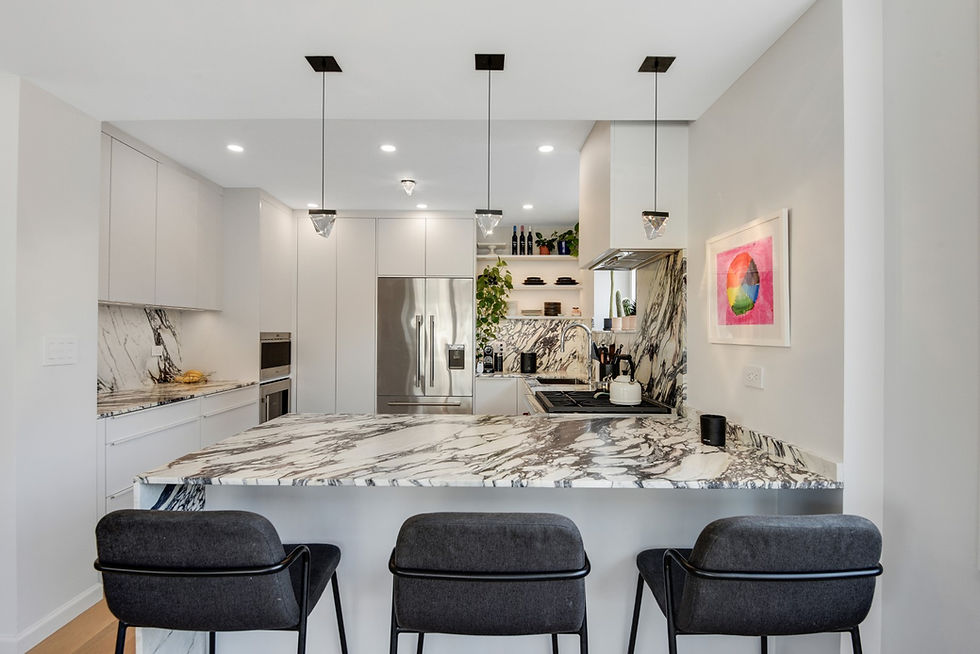
Pendant lighting above an island is one of the most effective single design moves in a kitchen — it defines the island as a distinct zone, provides task lighting over the work surface, and adds vertical presence to a room that is otherwise horizontal. LEICHT’s integrated lighting options include handle-profile lighting, in-drawer LEDs, and plinth lighting. See our kitchen lighting guide for placement principles.
Browse completed island kitchen projects including this Queens apartment and Woodmere, or explore our full project gallery filtered for island kitchens. Visit our New York showroom to see LEICHT island configurations at full scale, or explore our full program catalog and storage systems to plan your island interior.

%20(Large).jpg)
%20(Large).jpg)
.jpg)
.jpg)
.jpg)
.jpg)