How 3D Rendering Helps in Modern Kitchen Design

When planning a kitchen renovation, one of the biggest challenges homeowners face is visualizing the final result. Floor plans, elevations, and material samples are essential—but on their own, they often leave too much room for interpretation.

That’s where professional 3D kitchen rendering becomes essential.
At Leicht Queens, we use 3D renderings not as marketing visuals, but as a core design and decision-making tool, especially for modern, minimalist, and European kitchen projects across Queens, Brooklyn, Manhattan, Bronx, and Long Island. This approach is an integral part of our work on local projects such as full-scale Kitchen Remodeling in Queens and throughout NY, where layout precision and visual clarity are critical.
This article explains how 3D rendering actually helps during the kitchen design process—and why it’s particularly valuable for NYC homes and apartments.
1. From Abstract Plans to a Clear, Realistic Vision
Most homeowners are not trained to read technical drawings. A 3D rendering bridges that gap by translating layouts, cabinetry, and finishes into a realistic, easy-to-understand visual of the future kitchen.
Instead of guessing how things might feel, you can clearly see:
Cabinet heights and proportions
Island size and clearances
Appliance placement and alignment
How light interacts with finishes throughout the day
This clarity helps align expectations early—before cabinets are ordered or walls are touched.
Early-stage kitchen elevation showing cabinet layout, proportions, and clearances. First 3D rendering translating technical plans into a clear visual layout and material concept. Photorealist kitchen rendering illustrating final finishes, lighting conditions, and spatial flow.
2. Making Confident Design Decisions—Especially for Minimalist Kitchens
Modern minimalist kitchens leave little room for error. Small details like handle choice, panel alignment, or finish transitions become very noticeable once installed.
A detailed 3D rendering allows you to:
Compare handleless vs. handled cabinetry
Visualize European handleless systems and integrated channels
Evaluate finishes such as matte lacquers, textured laminates, or wood veneers
Understand how appliances integrate into tall units and wall runs
For European kitchen design—where precision is part of the system—rendering is not optional. This is particularly true when designing modern minimalist kitchens with integrated appliances, such as built-in coffee systems and fully panel-ready refrigeration. (See our guide on Built‑In Coffee Makers for Modern Kitchens for a deeper look at how appliance integration impacts design decisions.) It’s the only way to fully understand how clean lines and tight reveals will come together in the real space.
Kitchen elevation showing cabinet alignment, proportions, and appliance placement. Initial 3D rendering to evaluate handleless cabinetry and appliance integration. High-realism rendering showing finalized design intent before installation. 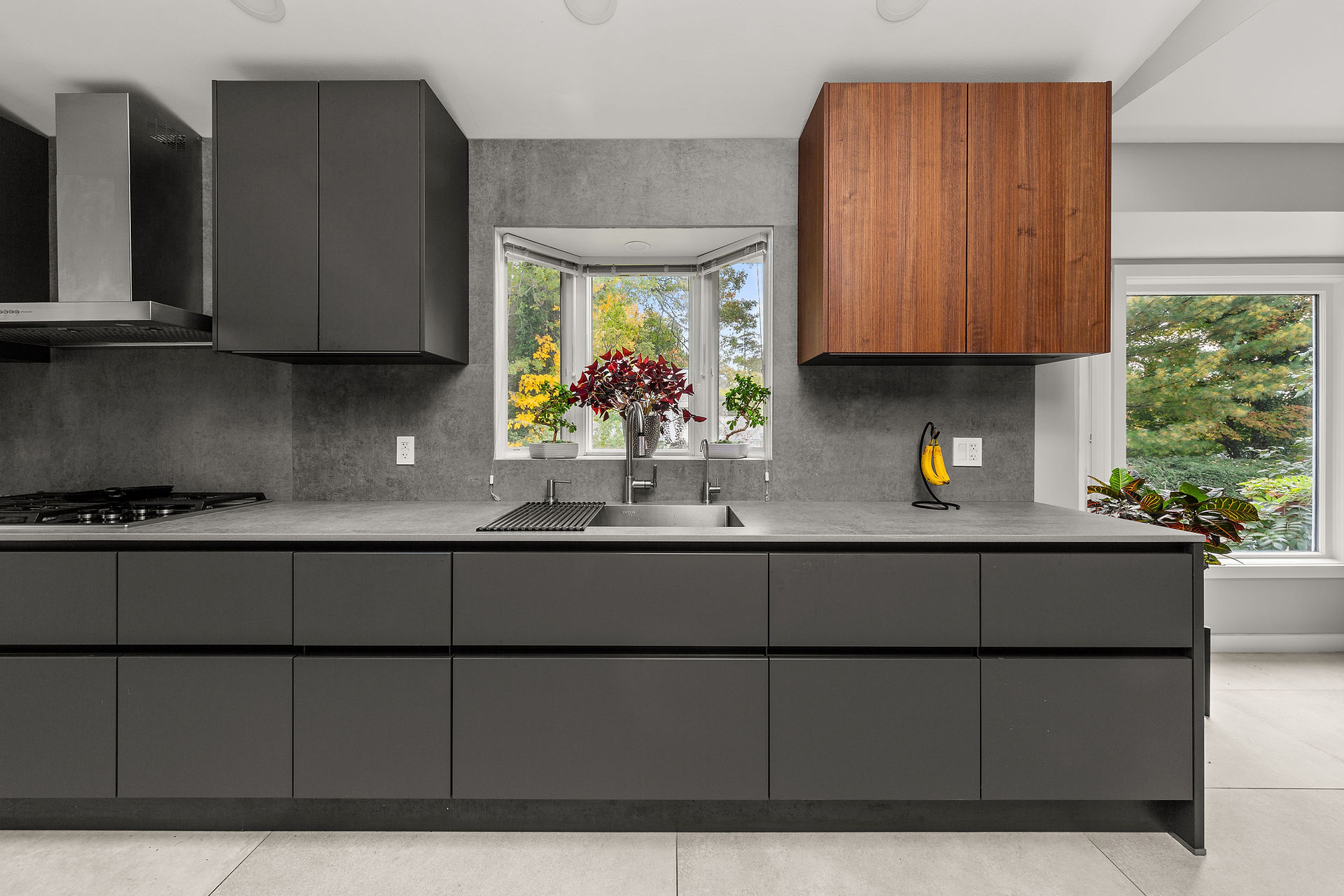
The completed kitchen matching the approved 3D rendering.
3. Catching Layout and Functional Issues Before They Become Costly
One of the most critical roles of 3D rendering is problem prevention.
Because everything is modeled to scale, renderings often reveal issues that aren’t obvious in drawings, such as:
Tight walkways or door clearances
Appliance doors conflicting with panels or handles
Awkward filler pieces or misaligned cabinet runs
Lighting that doesn’t properly illuminate work areas
Fixing these issues digitally is far easier—and far less expensive—than discovering them after installation.
4. Essential for NYC Apartment Kitchen Design
In New York City apartments, space is rarely forgiving. Whether it’s a galley kitchen, an L-shape, or an open-concept layout, every inch matters.
3D rendering is especially valuable for:
Apartment kitchen renovations
Open kitchens connected to living or dining spaces
Kitchens with ceiling height constraints
Projects where storage and flow must be maximized
Seeing the kitchen in context—how it connects visually and physically to the rest of the apartment—helps ensure the design feels intentional rather than crowded. Many clients find it helpful to compare the original 3D rendering with a completed installation, which is why we often reference real Leicht kitchen projects from our Projects gallery during the design phase.

5. Improving Communication With Contractors and Trades
A high-quality 3D rendering is not just for the homeowner. It becomes a shared visual reference for everyone involved in the project.
Contractors and installers can clearly understand:
Cabinet heights, depths, and alignments
Appliance locations
Lighting intent and placement
Panel integration and symmetry
This reduces assumptions, improves coordination, and helps projects run more smoothly from design through installation.
6. Confidence Before You Commit to Custom Cabinetry
Kitchen cabinetry—especially European and semi-custom systems—is not something you want to second-guess after ordering.
3D rendering gives homeowners confidence that:
The layout works in real life
The design fits their lifestyle
The kitchen will look and function the way they expect
For many clients, this confidence is what turns hesitation into excitement.
A Note on Design Accuracy
Professional kitchen renderings should reflect real, finalized design decisions, not hypothetical variations created just to look good.
At Leicht Queens, renderings are built from approved layouts, cabinet systems, and specifications. What you see in the rendering is designed to translate directly into the finished kitchen—with the same proportions, door styles, and detailing.
Frequently Asked Questions About 3D Kitchen Rendering
Is 3D rendering necessary for a kitchen renovation?
While not mandatory for every project, 3D rendering is highly recommended for modern, minimalist, and custom kitchens. It allows you to confirm layout, proportions, and finishes before committing to cabinetry and appliances—reducing costly changes later.
How accurate are kitchen renderings compared to the finished result?
When done professionally, a rendering should closely reflect the final kitchen. At Leicht Queens, renderings are built from approved layouts, cabinet systems, and specifications, ensuring what you see translates directly into the finished installation.
Does 3D rendering help with small or apartment kitchens?
Yes. In NYC apartment kitchens, where space is limited and layouts are tight, 3D rendering is especially valuable. It helps optimize storage, circulation, and visual balance before construction begins.
Can I compare different design options using a rendering?
Absolutely. Renderings allow you to compare handleless vs. handled cabinetry, finish options, appliance integration, and lighting scenarios—making design decisions clearer and more confident.
Do you provide 3D renderings as part of your kitchen design service?
Yes. Professional 3D rendering is a standard part of our kitchen design process for custom and European cabinetry projects.


